Preheat oven to 250°F (120°C). Line a baking sheet with parchment paper. Using the top of your pavlova pan or bowl as a guide, trace a circle about 8 inches in diameter on the parchment.
In a clean, grease-free bowl, beat egg whites with an electric mixer on medium speed until foamy. Add cream of tartar and continue beating until soft peaks form — when you lift the whisk, the peak should hold its shape but gently flop over.
Gradually add sugar, one tablespoon at a time, beating on high speed between additions. Continue until stiff, glossy peaks form. The meringue should look smooth and shiny, not grainy or curdled. About 8-10 minutes total.
Fold in vanilla extract and cornstarch using a rubber spatula — be gentle so you don't deflate the meringue. It's done when no white streaks remain.
Spoon meringue onto your traced circle, building up the edges higher than the center to create a little "bowl." Smooth the top with the back of your spoon. Bake for 1 hour until the exterior is firm and lightly golden (about 230°F internal temperature).
Turn off oven and crack door open slightly using a wooden spoon handle wedged in the door. Let pavlova cool completely inside — about 2 hours, or ideally overnight.
When ready to serve, whip cream with powdered sugar and vanilla until stiff peaks form (do not over-whip). Spread gently over the cooled pavlova.
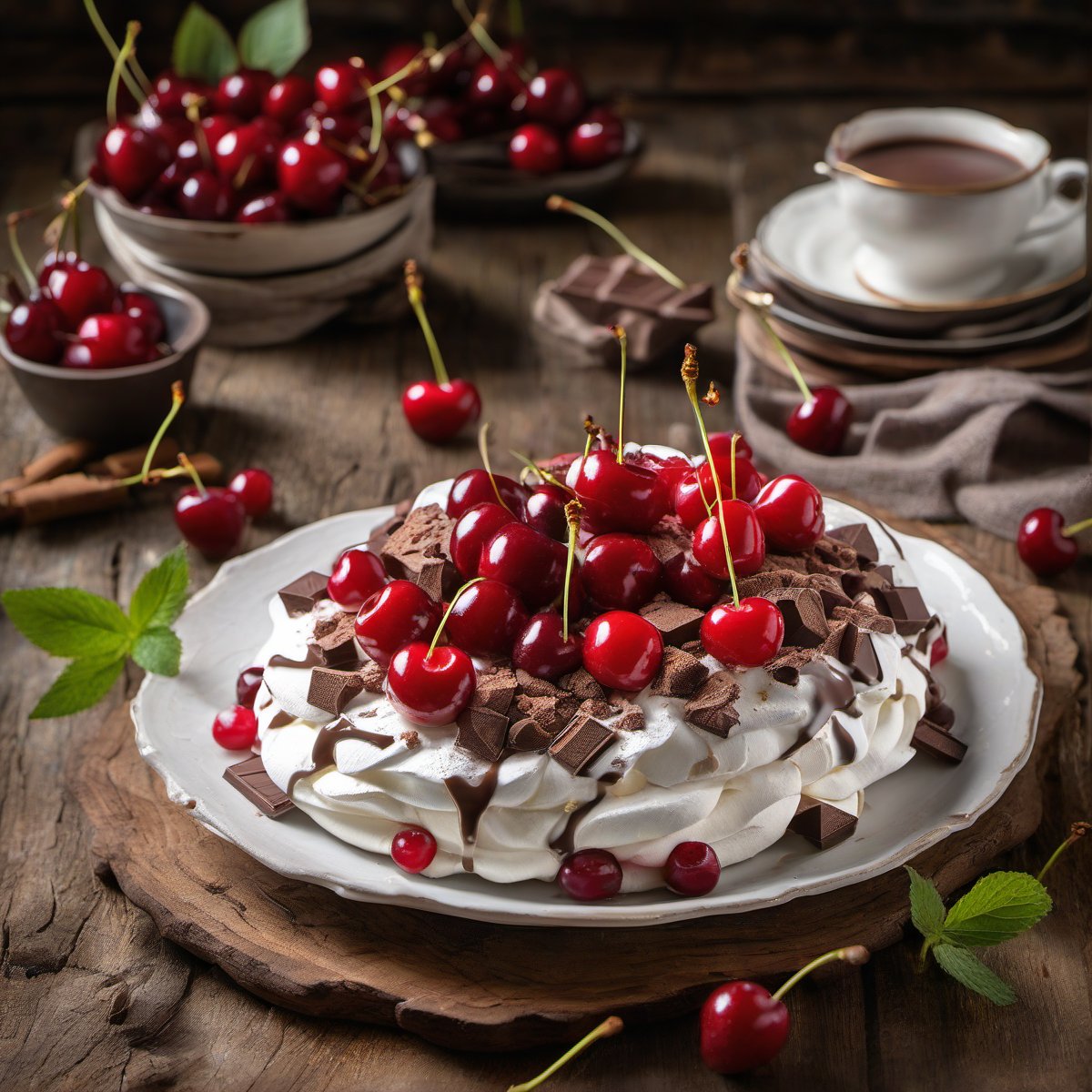
Sprinkle with chocolate and top with cherries and raspberries. Finish with toasted sliced almonds and additional chocolate drizzle if desired.