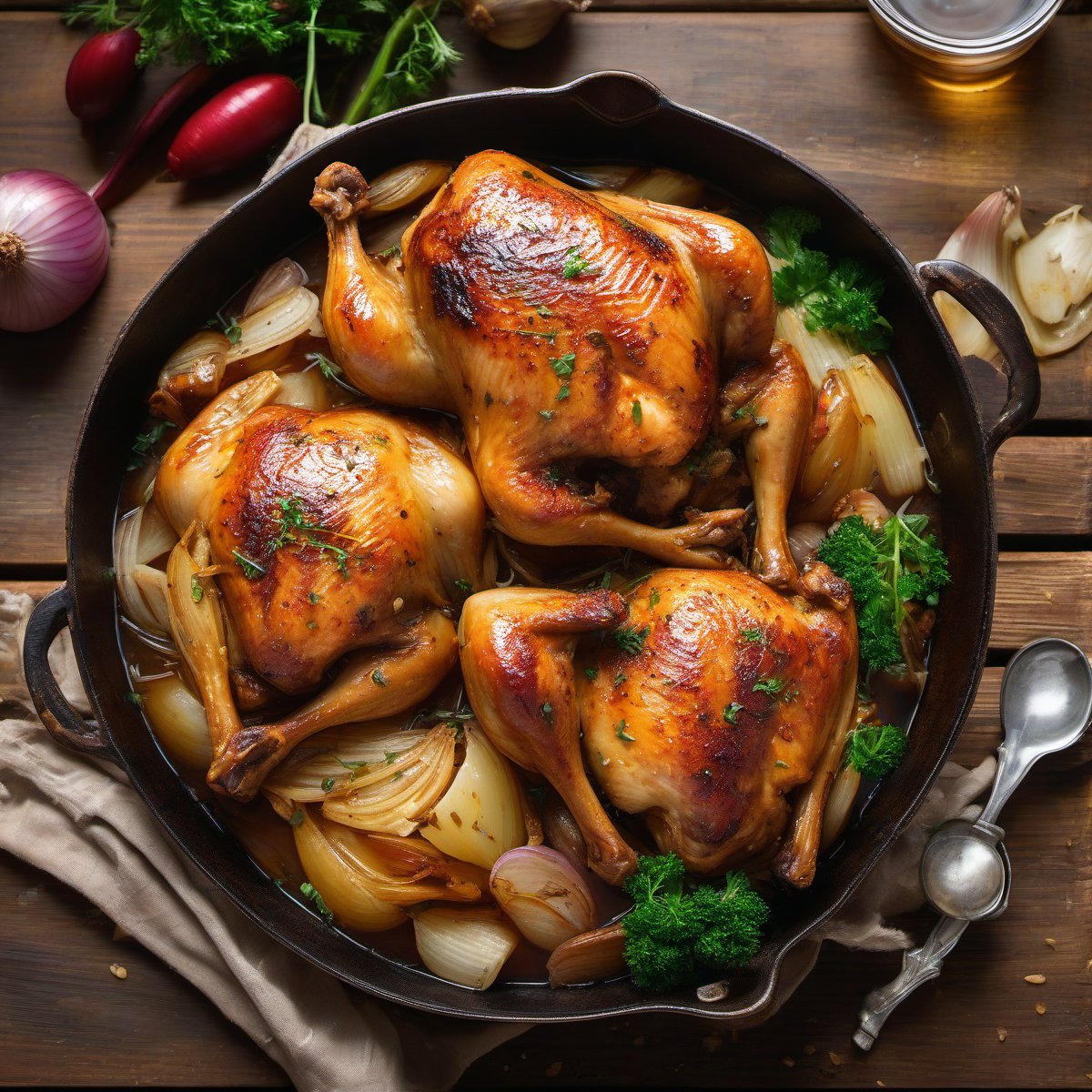
Ingredients
Method
- Prep the Chicken: Pat the chicken thighs dry with paper towels. Season generously on both sides with salt and pepper. In a small bowl, toss the chicken lightly in the flour until just coated; shake off any excess. This helps create a light crust and thickens the sauce later.
- Sear the Thighs: Heat olive oil in a large skillet or Dutch oven over medium-high heat. Once the oil shimmers, add the chicken thighs skin-side down. Cook undisturbed for 5–6 minutes until the skin is golden brown and crispy. Flip and cook for another 2 minutes on the other side. Remove chicken to a plate and set aside.
- Caramelize Onions: Reduce heat to medium-low. Add butter to the same pan. Add the sliced onions and a pinch of salt. Cook slowly, stirring every few minutes, for about 15–20 minutes until the onions are deeply golden brown and soft. They should look jammy, not just translucent.
- Build the Sauce: Stir in the minced garlic and cook for 30 seconds until fragrant. Pour in the apple cider vinegar to deglaze the pan, scraping up any browned bits (fond) from the bottom with a wooden spoon. Let it simmer for 1 minute to burn off the sharp alcohol taste.
- Braise: Return the chicken thighs to the pan, nestling them into the onions. Pour in the chicken broth, add thyme and bay leaf. Bring the liquid to a gentle bubble, then reduce heat to low. Cover tightly with a lid.
- Cook Until Tender: Simmer gently for 25–30 minutes. The internal temperature of the chicken should reach 165°F (74°C) at the thickest part, though thighs are forgiving up to 175°F for more fall-off-the-bone tenderness.
- Finish and Serve: Remove the lid and bay leaf. If the sauce is too thin, simmer uncovered for another 2–3 minutes. Taste and add honey or brown sugar if you prefer a sweeter profile to balance the vinegar. Serve immediately with the onions and sauce spooned over the top.
Nutrition
Notes
Make sure you use apple cider vinegar; its fruity tang holds up better during braising than white vinegar, which can turn sharp and metallic if reduced too aggressively. I always double-batch it because the sauce improves overnight, turning from a simple pan liquid into something complex enough to serve over mashed potatoes or crusty bread for guests.