Ingredients
Method
- Preheat the oven to 425°F and line a baking sheet with parchment paper. Lightly toast the hazelnuts in a dry skillet over medium heat, shaking occasionally, until fragrant and lightly browned, about 3–4 minutes. Transfer to a cutting board, let cool slightly, then rub between your palms to remove most of the skins. Chop coarsely and set aside.
- Pat the halibut fillets very dry with paper towels — this helps them get a good sear before roasting. Season generously on both sides with kosher salt and freshly ground black pepper.
- Heat olive oil in an oven-safe skillet over medium-high heat until shimmering but not smoking. Place the halibut skin-side down (if it has skin) or presentation side down in the pan. Let cook undisturbed for 2 minutes to get a light golden crust, then transfer the skillet to the hot oven.
- Roast for 8–10 minutes, depending on thickness. Start checking at 6 minutes: the fish is done when it reaches an internal temperature of 130°F and flakes easily with a fork but still feels slightly translucent in the center. Remove from the oven and let rest on the pan while you make the butter sauce.
- While the fish rests, reduce heat under the skillet to medium-low (or use a small saucepan). Add the butter and melt slowly, whisking occasionally. Watch carefully — brown butter goes from perfect to burnt in about 30 seconds. When it turns golden and smells nutty with little brown specks visible at the bottom, remove from heat immediately.
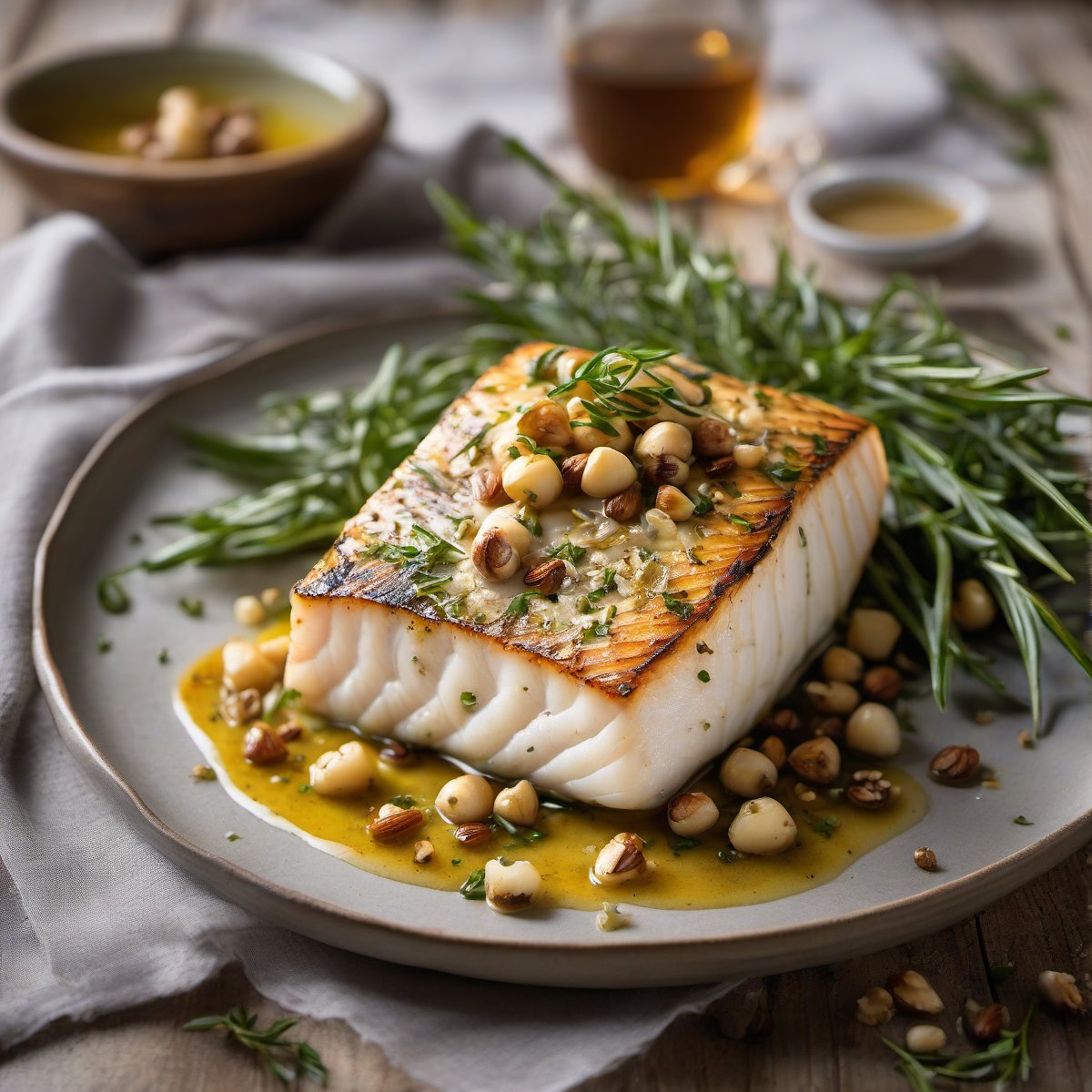
- Stir the chopped hazelnuts and tarragon into the brown butter. Add the lemon juice and whisk well. Pour over the resting halibut along with any accumulated juices in the pan. Sprinkle with a pinch of flaky sea salt and serve immediately.
Nutrition
Notes
Roasting halibut is easier than you think because you don't have to babysit it once it's in the oven. The real magic happens when you whisk tarragon into brown butter and pour it over the hot fish right at the end — the residual heat wakes up those anise-like notes without overwhelming anything else on the plate.
One thing that changed this recipe for me: toasting the hazelnuts before adding them. It takes two minutes of extra time but makes a noticeable difference in both flavor and texture. I also stop roasting when the fish hits 130°F instead of waiting for it to look fully opaque — it keeps coming out tender rather than rubbery.