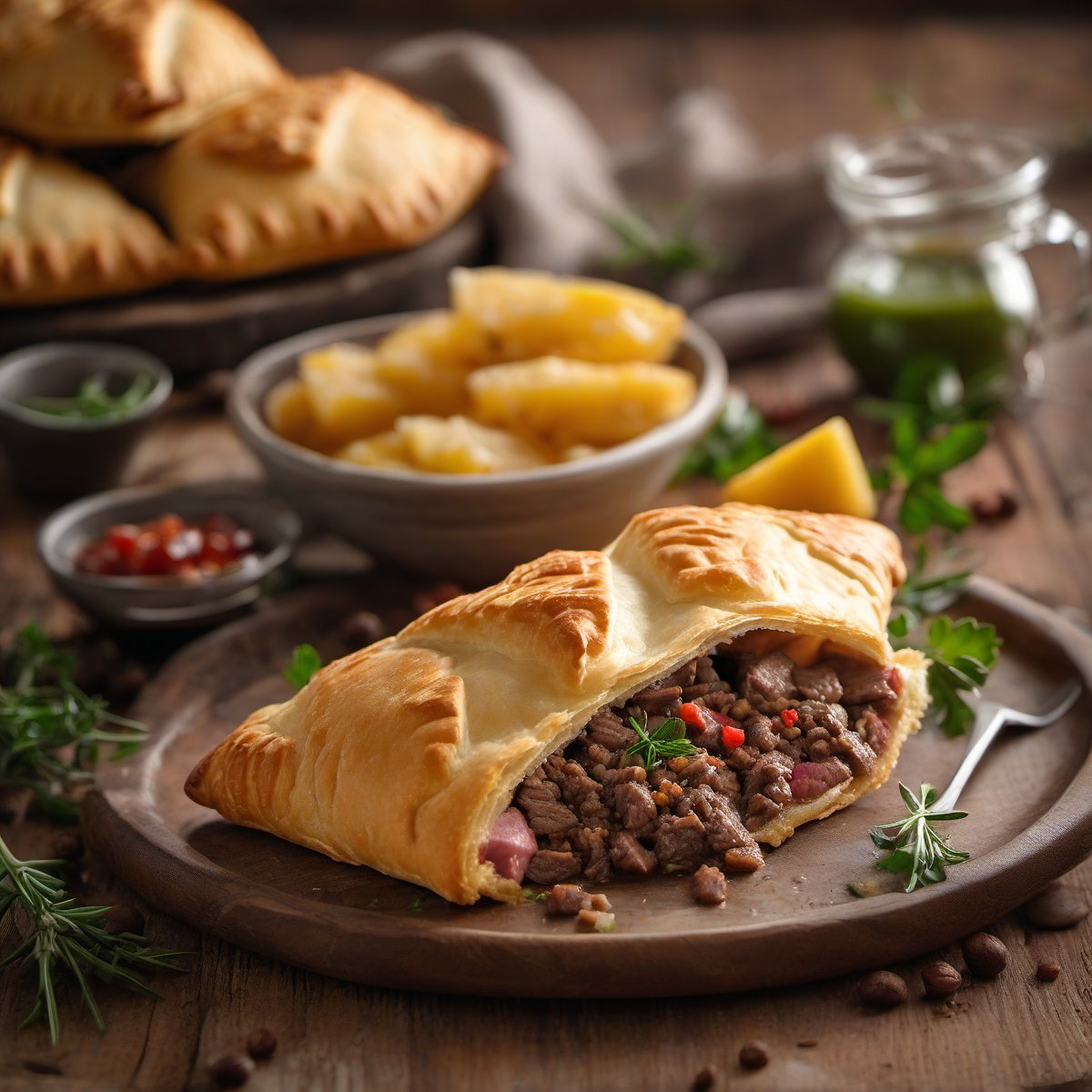
Ingredients
Method
- Make the pastry: In a food processor, pulse together flour and salt until combined. Add cold butter and lard (if using) and pulse until the mixture resembles coarse crumbs — you should see small pieces of butter visible throughout. Don't overwork it; too much mixing creates tough pastries instead of tender ones.
- Add water gradually: With the machine running, slowly pour in ice water one tablespoon at a time. Stop when the dough just begins to come together into large clumps that hold shape when pressed. If it looks dry, add another tablespoon or two; if too sticky, sprinkle more flour.
- Rest the dough: Turn out onto a lightly floured surface and divide into two balls. Flatten each slightly, wrap in plastic wrap, and refrigerate for at least 30 minutes — this step is crucial because it relaxes the gluten and keeps the pastry from shrinking during baking.
- Prepare the filling: While the dough chills, heat a large skillet over medium-high heat. Add cubed beef and cook until browned on all sides (about 5-7 minutes). Remove and set aside. In the same pan, add diced onions and sauté until translucent (3-4 minutes), then mix in potatoes and peas. Return the meat to the pan along with Worcestershire sauce. Season generously with salt and pepper.
- Roll out dough: On a lightly floured surface, roll each ball of pastry into an oval about 1/4 inch thick. Use a knife or cutter to cut strips roughly 6 inches wide by 8 inches long — the exact dimensions depend on how much filling you put inside your pasties.
- Shape and fill: Lay one strip flat on a baking sheet lined with parchment paper. Spoon half the filling mixture down the center, leaving space at both ends for sealing. Fold each end inward so they meet in the middle, creating a long rectangle shape. Press edges firmly to seal completely — this step prevents leakage during baking.
- Brush and bake: Lightly brush tops of pasties with egg wash. Place on parchment-lined baking sheets, spacing them apart so air circulates evenly around each one. Bake at 375°F for about 40-45 minutes until golden brown and crispy on top. Internal temperature should reach 165°F in the center where the meat sits.
- Cool before serving: Let pasties rest for 5-10 minutes before slicing open to prevent the filling from spilling out onto your plate. Serve warm alongside a simple green salad or pickled vegetables for contrast against rich pastry and savory beef filling.
Nutrition
Notes
I make this recipe in big batches — eight to ten at once — because they freeze beautifully and reheat just fine in a 400°F oven. The filling is straightforward: diced beef, onions, potatoes, peas, and a splash of Worcestershire for depth. I like using chuck steak since it holds up well during the long bake without turning tough.
The pastry itself is what really matters here — flaky layers from rolling in butter before folding, then crimping tightly so no juices escape. A good crimp gives you confidence that your pasty won't leak into the pan below. I recommend a fork or your fingers for sealing; both work well depending on whether you prefer rustic or precise edges.