Ingredients
Method
- Prep the Oven and Pans: Preheat your oven to 350°F (175°C). Grease two 9-inch round cake pans with non-stick spray, then dust with a light layer of flour, tapping out excess. Line the bottoms with parchment paper for easy removal.
- Whisk Dry Ingredients: In a medium bowl, whisk together the cake flour, baking powder, baking soda, and salt until uniformly combined. Set aside.
- Cream Butter and Sugar: In the bowl of a stand mixer fitted with the paddle attachment (or using hand mixers), beat the softened butter on medium speed for 1 minute to soften it further. Add the granulated sugar and beat on high speed for 4-5 minutes, until the mixture is pale yellow, fluffy, and has increased in volume. Scrape down the sides of the bowl with a spatula.
- Add Eggs and Vanilla: With the mixer running on medium-low, add the eggs one at a time, mixing just until each egg is incorporated before adding the next. Mix in the vanilla extract. Stop the mixer and scrape down the bowl again.
- Combine Wet and Dry: Reduce mixer speed to low. Add half of the flour mixture to the butter mixture and mix until just combined. Pour in all of the sour cream and milk, mixing on low until incorporated. Finish by adding the remaining flour mixture, mixing only until no streaks of flour remain. Do not overmix.
- Bake: Divide the batter evenly between the prepared pans. Bake for 25-30 minutes. The cakes are done when the tops are golden brown and spring back lightly to the touch, or when a toothpick inserted into the center comes out clean. Internal temperature should reach 200°F (93°C).
- Cool: Let the cakes cool in the pans for 10 minutes, then invert them onto wire racks to cool completely before frosting. This prevents the delicate crumb from tearing.
- Make the Frosting: While cakes cool, beat the softened butter on medium-high speed until light and creamy (about 3 minutes). Gradually add the sifted powdered sugar, vanilla extract, salt, and heavy cream. Beat on high for 2-3 minutes until fluffy. If too stiff, add more cream by the teaspoon; if too thin, add more sugar.
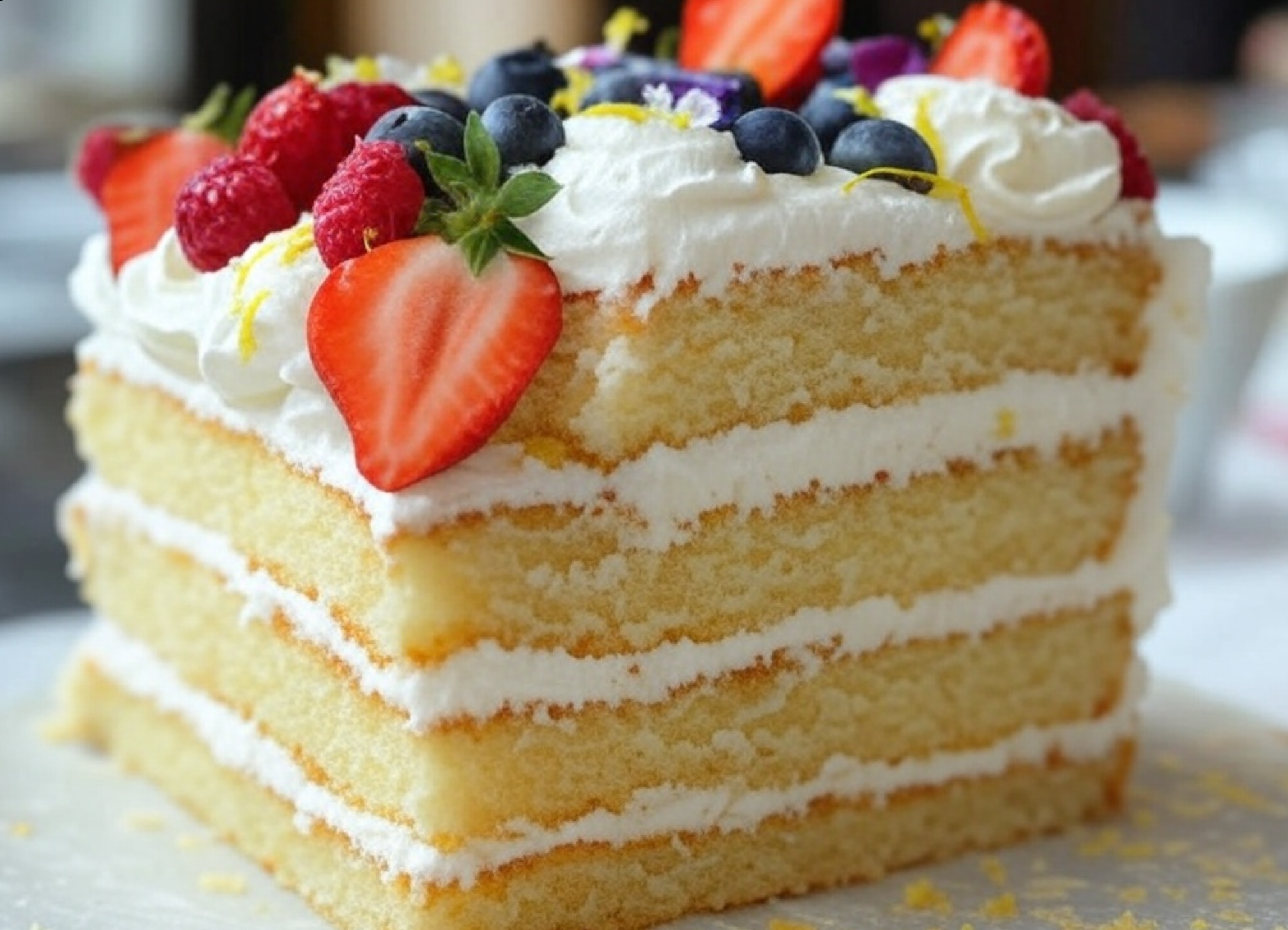
- Assemble: Place one cake layer on a serving plate. Spread a generous layer of frosting over the top. Place the second layer on top (upside down for a flat surface). Frost the top and sides with the remaining buttercream using an offset spatula or bench scraper for a smooth finish.
Nutrition
Notes
It’s become my go-to because it stays moist for days and pairs beautifully with everything from simple berry compotes to rich chocolate ganache. If you skip the step of letting ingredients come to room temperature before mixing, you’ll get lumpy batter; if you bring them out thirty minutes early, the emulsion holds perfectly.