Ingredients
Method
- Brown the pork: Heat olive oil in a large Dutch oven or heavy-bottomed pot over medium-high heat. Add the ground pork, breaking it up with a wooden spoon. Cook until browned and crispy on the edges, about 8-10 minutes. Remove any excess grease if desired, but leave the flavorful fond (browned bits) at the bottom of the pot.
- Sauté aromatics: Reduce heat to medium-low. Add the diced onion to the pot with the pork. Cook until softened and translucent, about 5-6 minutes. Stir in the garlic and Calabrese chili flakes; cook for another minute until fragrant. Be careful not to burn the garlic.
- Deglaze: Pour in the red wine. Increase heat to medium-high and scrape up any browned bits from the bottom of the pot with your wooden spoon. Let the wine simmer until it reduces by half, about 3-4 minutes.
- Simmer the sauce: Stir in the crushed tomatoes, tomato paste, oregano, salt, and pepper. Bring the mixture to a gentle bubble. Reduce heat to low, cover partially (leave the lid slightly ajar to allow steam to escape), and simmer for at least 30 minutes, stirring occasionally. For deeper flavor, simmer up to 1 hour. The sauce should thicken significantly.
- Cook the pasta: While the ragù simmers, bring a large pot of generously salted water to a boil. Add the rigatoni and cook according to package directions until al dente (usually 1-2 minutes less than recommended). Reserve 1 cup of starchy pasta water before draining.
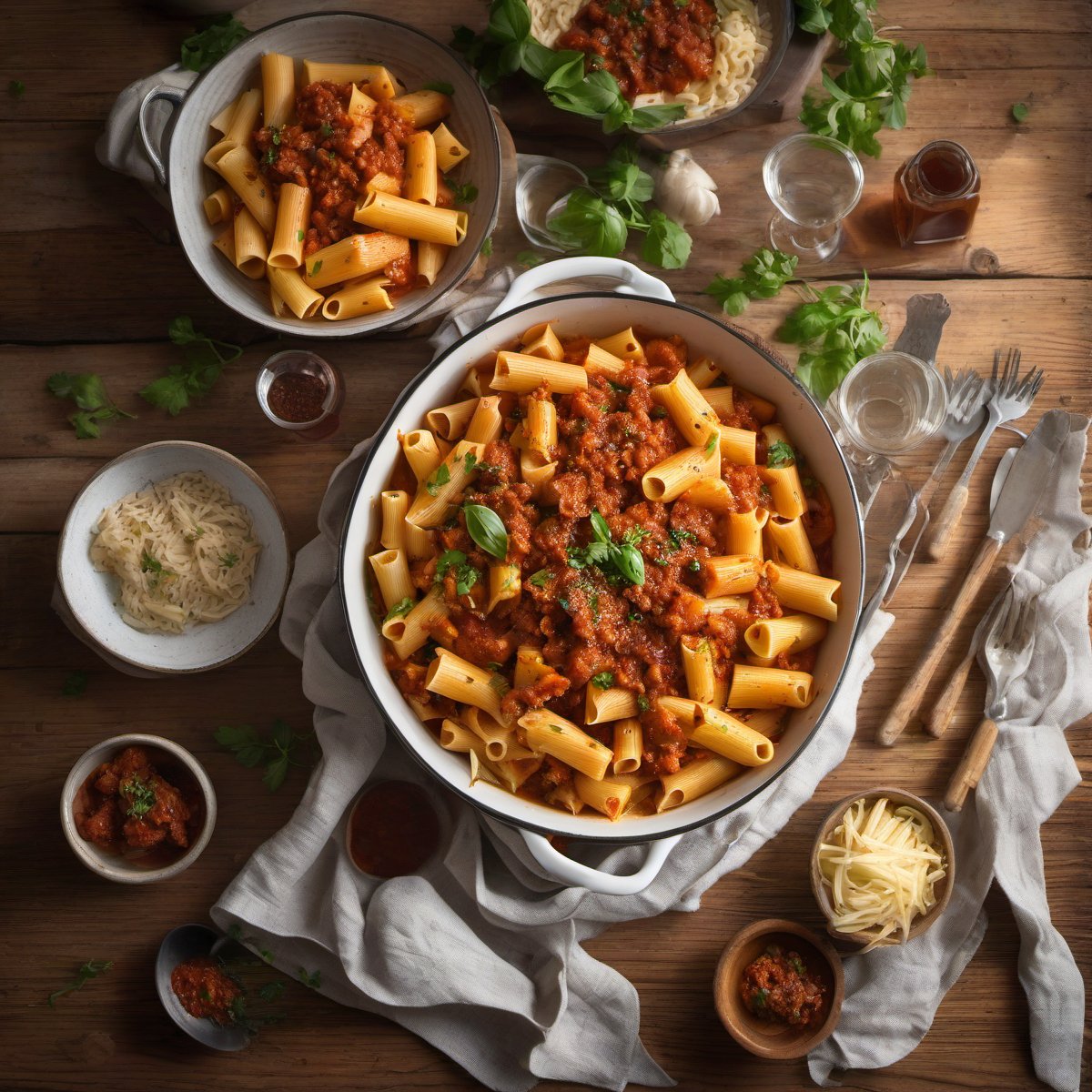
- Combine: Drain the pasta. Add the hot rigatoni directly to the pot with the ragù. Toss vigorously over low heat for 1-2 minutes, adding splashes of reserved pasta water as needed to create a silky sauce that clings to the pasta. The sauce should coat the noodles evenly without being watery.
- Serve: Remove from heat. Taste and adjust seasoning with more salt or pepper if needed. Serve immediately, topped with torn fresh basil and a generous grating of Parmigiano-Reggiano cheese.
Nutrition
Notes
The secret lies in browning the pork until it’s nearly crispy before adding the tomatoes. This step builds a fond at the bottom of the pot that transforms the sauce from simple to complex. It takes patience, but the effort pays off in every bite.
I always keep a jar of this ragù in the freezer. When dinner time approaches and I’m unsure what to make, it’s there, ready to be reheated and tossed with rigatoni. The texture holds up perfectly, making it an ideal solution for busy evenings.