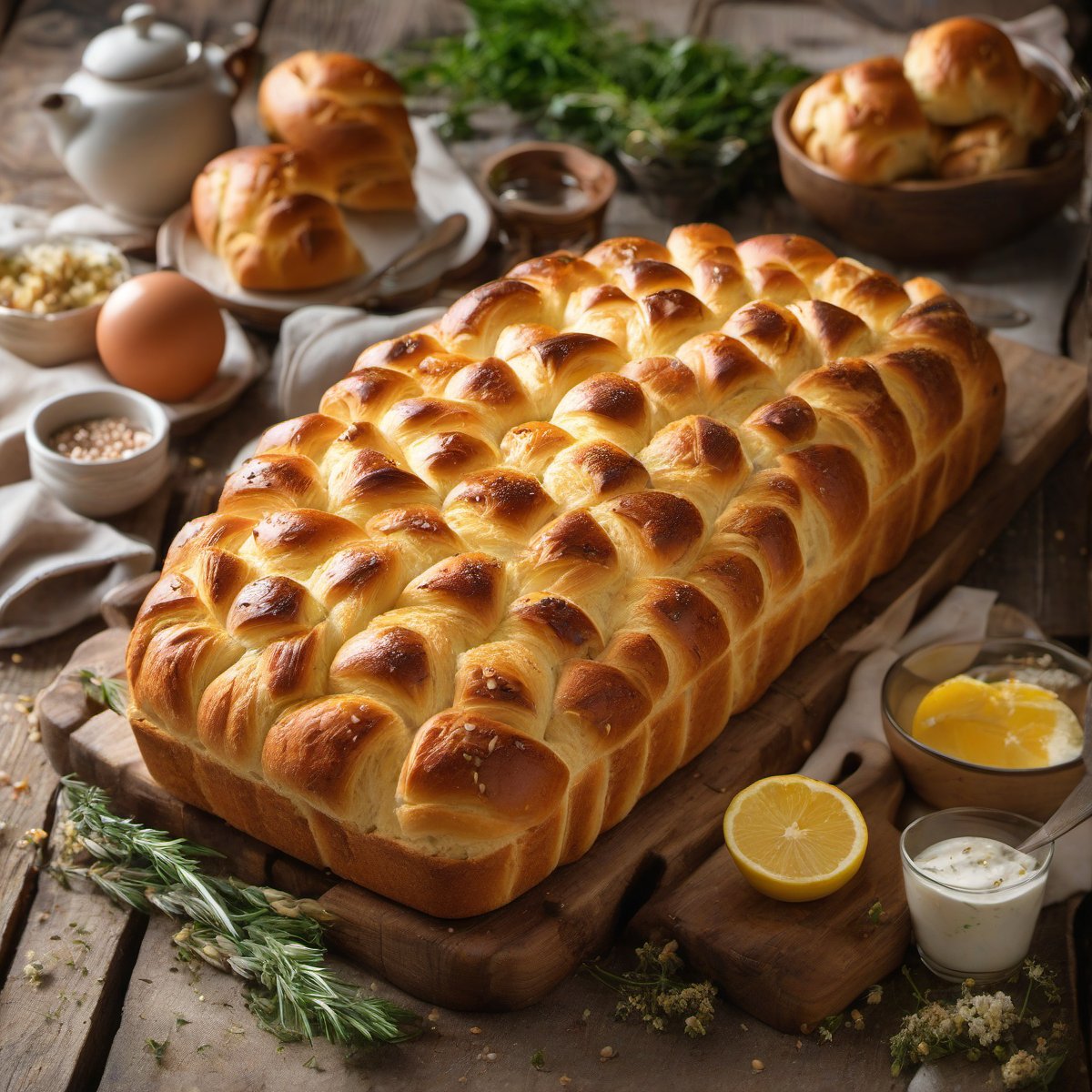
Ingredients
Method
- In a large bowl (or stand mixer with dough hook), whisk together flour, sugar, yeast, and salt. Make a well in the center.
- Add egg, warm milk, and softened butter to the well. Mix until a shaggy dough forms — about 1 minute on medium speed if using a mixer, or by hand for 3-4 minutes.
- Turn out onto a lightly floured surface and knead for 5 minutes, until smooth and elastic. The dough should feel tacky but not sticky; add another tablespoon of flour if needed. (If the kitchen is warm, you may need less.)
- Place dough in a greased bowl, cover with plastic wrap or a damp towel, and let rise until doubled — about 45 minutes to an hour. I know this recipe doesn't call for two rises, but one good rise makes all the difference. The dough is ready when you press it lightly and the indentation springs back slowly rather than immediately filling in.
- Punch down gently, then roll into a large rectangle (about 12 by 8 inches). Brush with half the melted butter mixture. Sprinkle evenly with garlic and herbs.
- Cut the rectangle into 1-inch wide strips, then cut those crosswise to make roughly 40 pieces. Stack them in tall towers of about 10 pieces each — don't worry if they're a little uneven; that's what gives pull-apart bread its character.
- Arrange the stacks in a greased bundt pan or tube pan, packing them snugly so there are no large gaps between towers. You may need to push some down as you go.
- Cover loosely and let rise again until puffy — about 30 minutes. The dough should look like it's about to spill over the edges of each tower.
- Brush with remaining butter mixture, then sprinkle with flaky salt if using. Bake at 375°F for 25-30 minutes, until golden brown and the loaf sounds hollow when tapped on the bottom (about 195°F in the center).
- Let cool in pan for 5 minutes, then invert onto a serving platter. Serve warm — it pulls apart most easily while still slightly warm.
Nutrition
Notes
What makes pull-apart bread worth making is how it rewards patience. The dough comes together quickly with minimal kneading, and shaping it into a ring takes fewer steps than most people expect. I like to brush melted butter over the top before baking; it gives the crust that golden, slightly crisp edge that pulls away from each piece beautifully.
I make this when people come over unexpectedly because there's nothing fussy about serving it warm and scattered on a platter. You can serve it plain, or mix in herbs, cheese, garlic — whatever you have around. It keeps well wrapped for two days, though I've never seen leftovers last that long.