Go Back
–+ servings
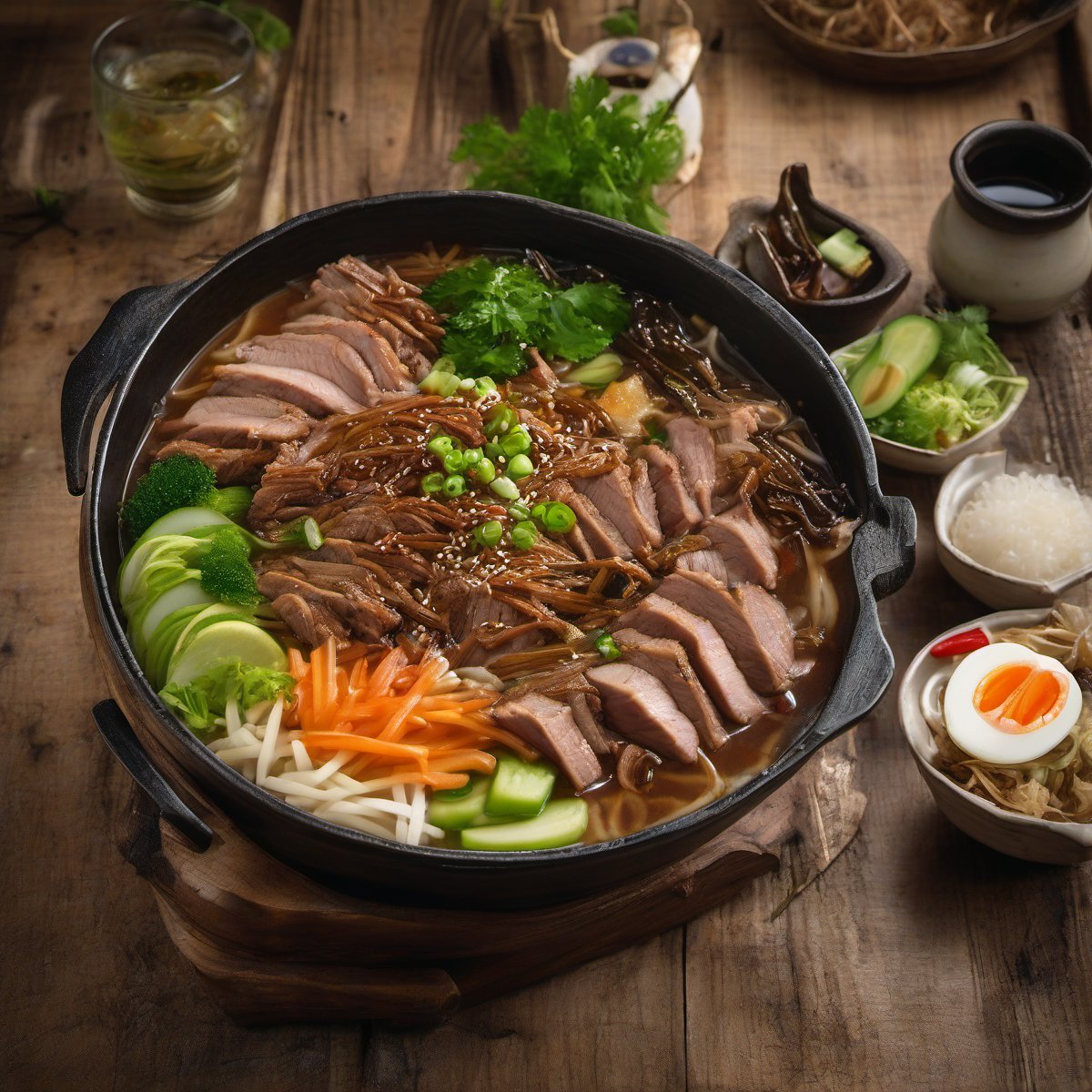
Pork Sukiyaki — Fresh homemade recipe photo

Pork Sukiyaki

No ratings yet
I've been making pork sukiyaki at home for about four years now. The first time I tried it, the sauce was too sweet — I'd used regular soy sauce instead of the darker variety — so my husband complained that his noodles tasted like dessert. I adjusted the ratios on my next attempt and never looked back.
What keeps me coming to this recipe is how forgiving it is with ingredients. You can use whatever cut you have, swap mushrooms based on what's in season, and honestly, the leftovers taste even better the second day when everything has melded together. I keep a carton of kikkoman soy sauce specifically for this dish because the flavor difference from store brands is noticeable after you've tasted both side by side.
I like to serve it with a small bowl of raw egg on the side, which people seem hesitant about at first but then dip their noodles into without hesitation. The egg gives the pork an almost custardy quality that feels indulgent without being heavy.
Prep Time 20 minutes
Cook Time 15 minutes
Total Time 35 minutes
Servings: 4 servings
Course: Main Dish
Cuisine: Japanese
Calories: 420

Ingredients
  

Pork and Oil
  • 1½ lbs boneless pork shoulder loin or neck, cut into thin slices against the grain
  • 2 tbsp neutral oil vegetable, canola, or grapeseed
Vegetables and Aromatics
  • 4 green onions white parts minced and green parts sliced diagonally
  • 8 oz shiitake mushrooms stems removed and caps quartered
  • 1 cup daikon radish peeled and cut into half-moon slices (or substitute 2 carrots)
  • 6 oz napa cabbage chopped into 2-inch pieces
  • 4 cloves garlic thinly sliced
Sauce Ingredients
  • 3 tbsp sugar
  • ¼ cup mirin
  • ¼ cup sake or dry white wine
  • ½ cup dark soy sauce use kikkoman if you can find it
  • 1 tbsp light soy sauce
  • 2 cups dashi stock or substitute chicken broth with a pinch of kombu
Thickening and Serving
  • 3 tablespoons cornstarch mixed with ¼ cup water for thickening
  • raw egg yolks for serving optional

Method
 

  1. Heat the neutral oil in a large skillet or Dutch oven over medium-high heat until shimmering but not smoking.
  2. Add half of the pork slices to the hot pan and cook undisturbed for 2 minutes until a golden crust forms on the bottom side. Flip and cook another minute. Remove pork from the pan and set aside on a plate. Repeat with remaining pork.
  3. In the same skillet, add the minced green onion whites and cook for 30 seconds until fragrant. Add garlic and shiitake mushrooms; cook for 2 minutes until mushrooms release their liquid and begin to brown at the edges.
  4. Pour in the sugar, mirin, sake, dark soy sauce, light soy sauce, and dashi stock. Bring to a gentle simmer while scraping up any browned bits from the bottom of the pan with a wooden spoon — these are flavor you don't want to lose.
  5. Return the pork slices to the skillet along with the daikon radish (or carrots). Simmer for 3 minutes until the radish is translucent and tender when pierced with a fork.
  6. Add the napa cabbage and cook for another 2-3 minutes until it wilts but retains some texture. The sauce should be bubbling gently.
  7. Stir in the cornstarch slurry and cook for 1 minute while stirring constantly, until the sauce thickens enough to coat the back of a spoon (it should look like a thin gravy). Remove from heat.
  8. Ladle into shallow bowls or individual small pots. Serve with sliced green onion tops sprinkled on top and raw egg yolks in separate ramekins for dipping.

Nutrition

Calories: 420kcalCarbohydrates: 18gProtein: 32gFat: 26gSaturated Fat: 7gCholesterol: 95mgSodium: 890mgPotassium: 480mgFiber: 3gSugar: 12gVitamin A: 15IUVitamin C: 18mgCalcium: 60mgIron: 3mg

Notes

Make ahead: The sauce base (step 4 ingredients) can be made up to 3 days in advance and stored in the refrigerator. Bring to a simmer before adding vegetables and pork.
Substitutions: If you don't have mirin, substitute with 1 tablespoon sugar plus 2 tablespoons dry white wine. For sake, use an equal amount of dry sherry or extra wine.
Storage: Keeps in the refrigerator for up to 3 days. Reheat gently on the stovetop — do not boil vigorously or the cabbage will break down completely.
Serving suggestion: This dish pairs beautifully with steamed rice, a light miso soup, and pickled vegetables like takuan (daikon pickle) or umeboshi to cut through the richness.

Tried this recipe?

Let us know how it was!