Ingredients
Method
- Heat the cream mixture: Pour the heavy cream and vanilla bean seeds (plus pod, if using extract later) into a heat-proof bowl set over a pot of barely simmering water (double boiler). Heat gently until it just begins to steam, about 3-5 minutes. Do not boil. Remove from heat.
- Temper the yolks: In a separate medium bowl, whisk egg yolks and granulated sugar together until pale and slightly thickened, about 1 minute. Slowly pour about half of the hot cream mixture into the yolks while whisking constantly to prevent scrambling. Whisk the tempered yolk mixture back into the remaining cream in the double boiler.
- Cook until thick: Continue to cook over low heat, stirring constantly with a silicone spatula or wooden spoon, until the custard coats the back of the spoon and leaves a clear path when you run your finger through it (approx. 170°F / 75°C internal temperature). This takes about 8-10 minutes total.
- Strain and chill: Strain the mixture through a fine-mesh sieve into a clean pitcher to remove any cooked egg bits or vanilla pod pieces. Divide evenly among 4 ramekins (6 oz each). Let them cool to room temperature, then cover loosely with plastic wrap and refrigerate for at least 4 hours, preferably overnight.
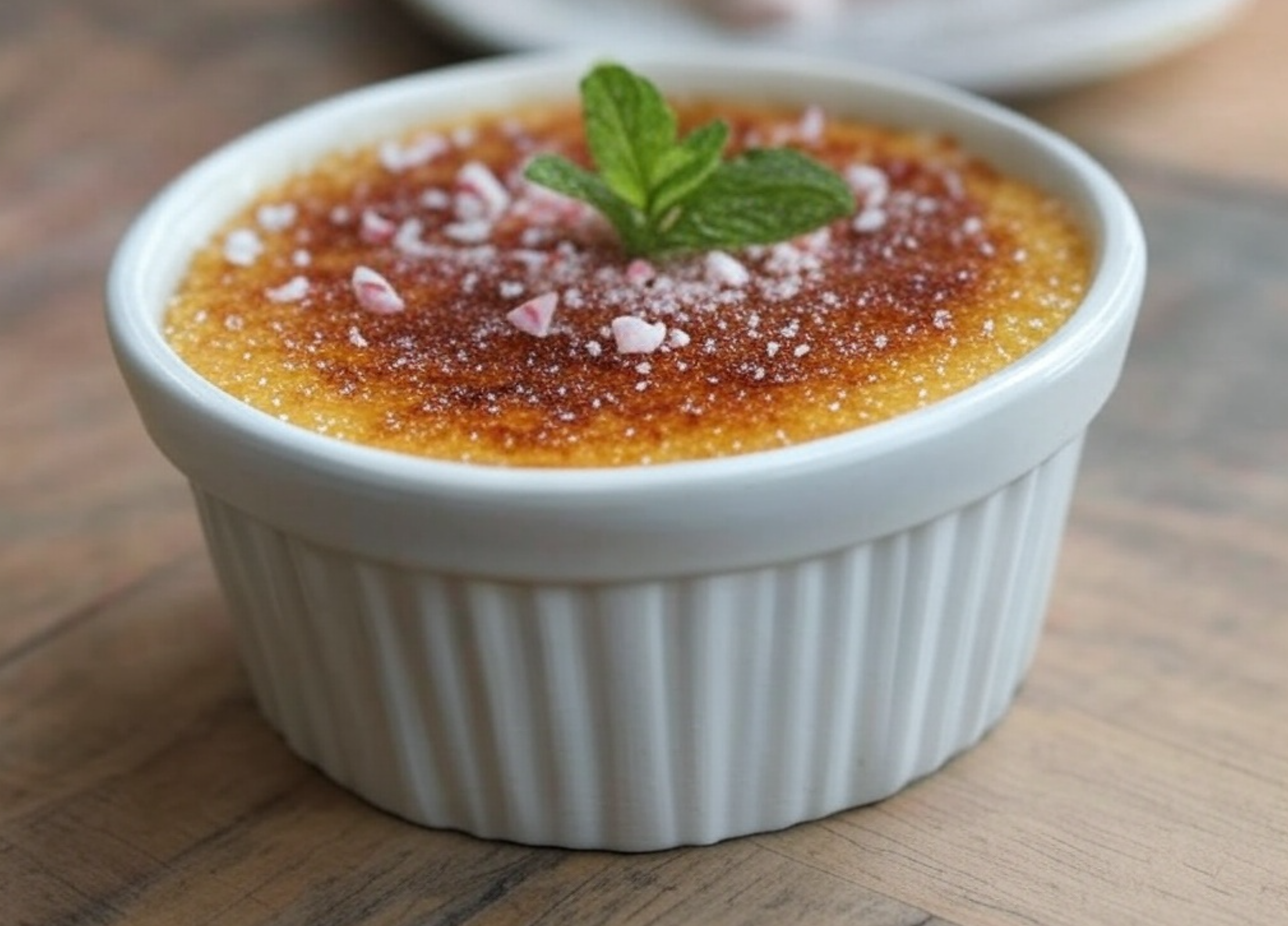
- Caramelize the sugar: Remove ramekins from the fridge just before serving. Pat any condensation off the tops if necessary. Sprinkle a thin, even layer of turbinado or white sugar over each custard (about 1 tbsp per ramekin). Use a kitchen torch to melt and caramelize the sugar until it forms a hard, amber-colored crust. Alternatively, place under a broiler for 1-2 minutes, watching closely so it doesn't burn.
- Rest and serve: Let the sugared custards sit for exactly 1 minute before serving. This allows the sugar to harden into a glass-like shell. Serve immediately with a spoon.
Nutrition
Notes
This version skips the tricky water bath by using a double boiler method, which gives me more control over the texture. I always whisk in heavy cream at the end to ensure a silky mouthfeel without any graininess from overheating eggs. It’s elegant enough for guests but simple enough that I make it regularly.