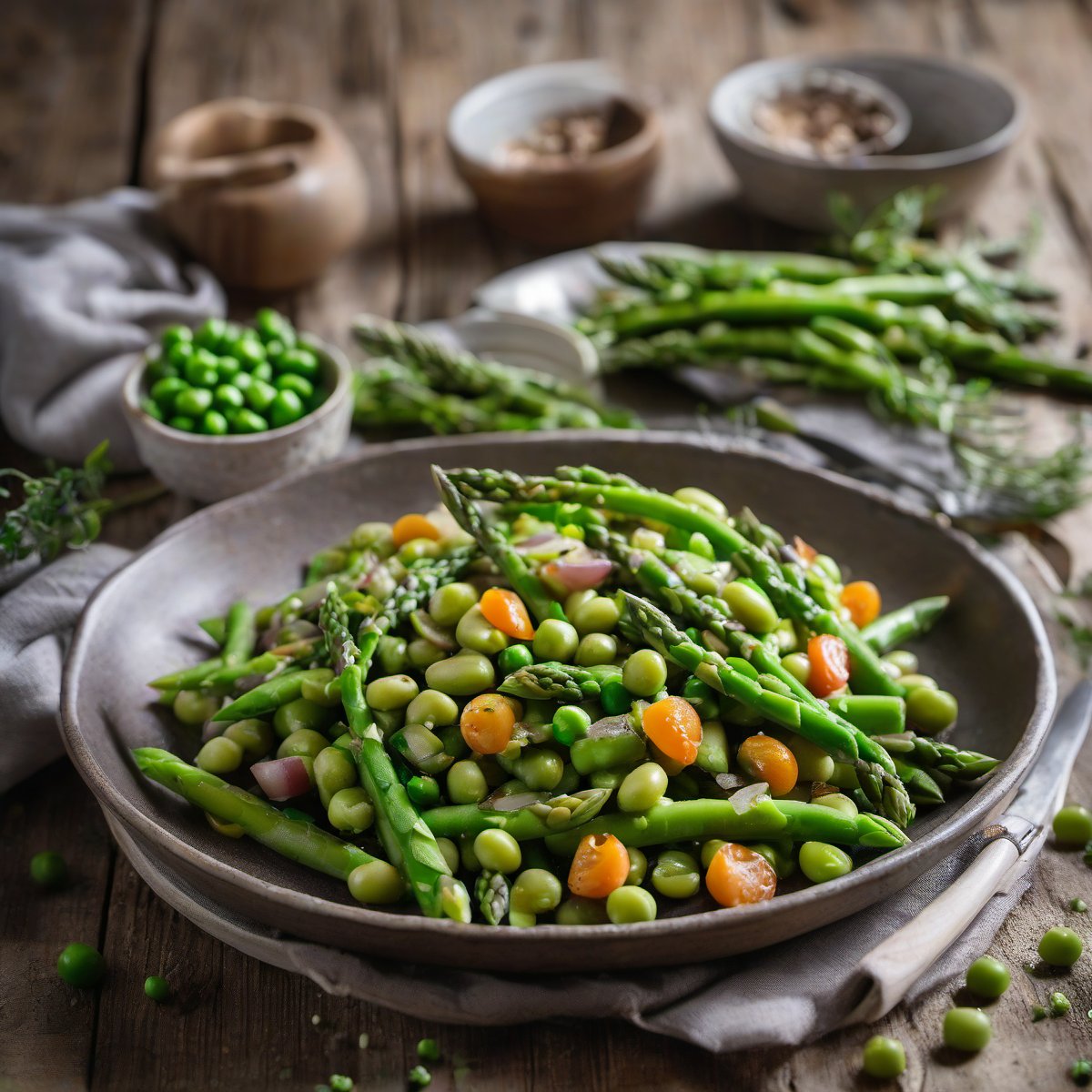
Ingredients
Method
- Prepare the favas. Bring a large pot of well-salted water to a boil. If using fresh favas, blanch them for 2 minutes until tender but still bright green, then transfer to an ice bath. Once cool enough to handle, slip out the inner beans by gently pinching each one — they should slide right out of their papery skins. (If using frozen favas, skip the skinning step and thaw before using.)
- Blanch the asparagus. In the same pot, bring water back to a boil and add the asparagus stalks. Cook for 1–2 minutes until bright green and tender-crisp. Remove with tongs and plunge into the ice bath. Once cool, cut on a sharp diagonal into 1½-inch pieces.
- Blanch the peas. Add the shelled peas to the boiling water for just 45 seconds — they should still hold their shape but taste fully cooked. Drain and add to the ice bath as well. (You can do this in stages if your pot is small.)
- Make the dressing. In a large mixing bowl, whisk together the olive oil, lemon juice, Dijon mustard, and a generous pinch of salt until emulsified. Taste — it should taste slightly too salty on its own; that's correct.
- Combine everything while warm. Add all three vegetables (asparagus, peas, favas) to the dressing bowl while still slightly warm so they absorb more flavor. Toss gently with a spoon or tongs until evenly coated.
- Finish and serve. Fold in the baby arugula last — it should wilt just slightly from the warmth of the other ingredients but stay mostly raw. Top with shaved Parmesan, toasted pine nuts or almonds, and an extra crack of black pepper. Serve at room temperature or chilled.
Nutrition
Notes
Make ahead: This salad keeps beautifully for up to two days in the refrigerator. If you're making it further ahead, leave off the arugula and nuts until serving — they'll wilt too much otherwise. Bring to room temperature before serving; the flavors really open up once things warm slightly.
Substitutions: If fresh favas are hard to find, frozen shelled favas work wonderfully (look for a brand that includes both the outer and inner beans). You can also use green beans or snap peas in place of the asparagus if they're out of season.
Don't skip the ice bath. This one step prevents overcooking and keeps the vegetables brilliantly colored — it's worth the extra bowl of water every time.
Serving suggestion: I love this alongside grilled chicken, fish, or even just with crusty bread for a light lunch. A handful of crumbled goat cheese on top adds another nice layer if you want something richer.