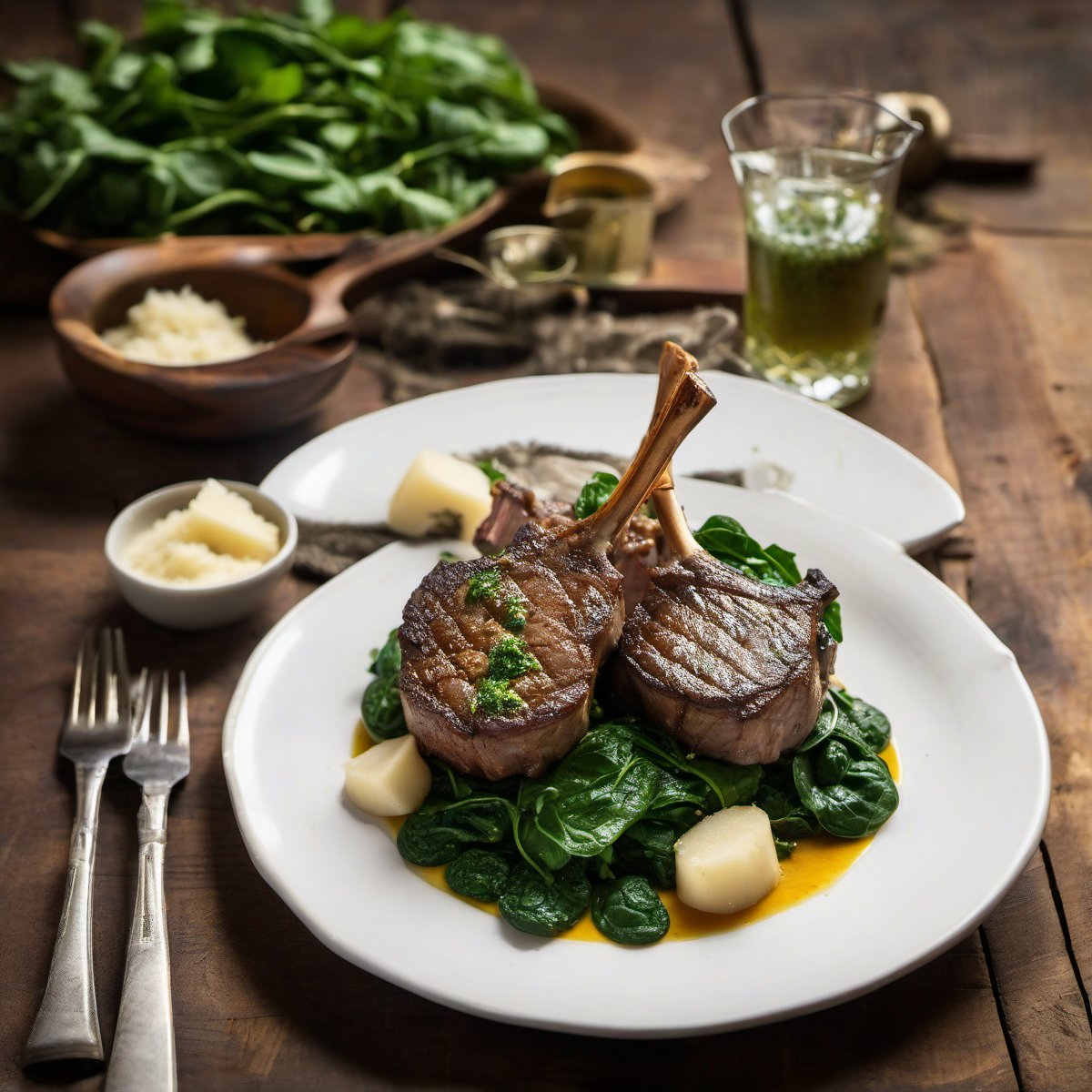
Ingredients
Method
- Prepare the puree base: Place the cubed turnips in a medium saucepan and cover with cold water by about an inch. Bring to a boil over high heat, then reduce to a simmer. Cook until the turnips are fork-tender, approximately 15-20 minutes. Drain well and return them to the warm pot for a minute to let excess moisture evaporate.
- Make the puree: Transfer the drained turnips to a food processor or blender. Add the butter and heavy cream. Blend until completely smooth. Season generously with salt and pepper. Keep warm on low heat or cover tightly to retain warmth while you cook the lamb.
- Sear the lamb: Pat the lamb chops dry with paper towels and season both sides liberally with salt and pepper. Heat olive oil in a large skillet (preferably cast iron) over medium-high heat until shimmering. Add the chops and sear without moving them for 2-3 minutes, or until a deep golden-brown crust forms.
- Add aromatics: Flip the chops. Immediately add the minced garlic and chopped rosemary to the pan around the meat (not directly on top, so it doesn't burn). Cook for another 2-3 minutes for medium-rare, basting the lamb with the herb-infused oil using a spoon.
- Check temperature: Insert an instant-read thermometer into the thickest part of the chop, avoiding the bone. Remove from heat when the internal temperature reaches 130°F (54°C) for medium-rare or 140°F (60°C) for medium. The temperature will rise slightly as it rests.
- Wilt the spinach: In the same pan, add the fresh spinach leaves to any remaining oil and garlic bits. Toss for just 30-60 seconds until wilted but still vibrant green. Remove from heat.
- Rest and serve: Transfer lamb chops to a cutting board and let them rest for 5 minutes. Spoon the turnip puree onto plates, top with the warm spinach, and arrange the rested lamb chops alongside. Serve immediately with lemon wedges on the side.
Nutrition
Notes
I keep this in my regular rotation because it feels elegant but requires minimal active effort. The key is not overcrowding the pan when searing; give each chop space to develop a proper crust rather than steaming itself in its own juices.
The puree comes together while the meat rests, keeping your timing tight and your stress low.