Ingredients
Method
- Prepare the vegetables: Place your sliced zucchini and chopped green onions in a medium bowl. Sprinkle the 1/4 cup of flour over them and toss gently until every piece is lightly coated. This coating helps create crispy edges when fried.
- Mix the batter: In a separate large bowl, whisk together the 1 cup flour, salt, eggs, and ice-cold water. Whisk vigorously for about 30 seconds to remove lumps. The batter should be thin, similar to heavy cream or buttermilk. If it looks too thick (like pancake batter), add another tablespoon of cold water.
- Rest the batter: Let the batter sit at room temperature for 15–20 minutes. This allows the flour to fully absorb the liquid, which is key to a tender texture rather than a chewy one.
- Combine: After resting, stir the vegetable mixture into the batter. The vegetables will settle; give it a gentle fold to distribute them evenly. Do not overmix once combined.
- Heat the pan: Place a non-stick or cast-iron skillet over medium heat. Add about 1–2 tablespoons of oil, swirling to coat the bottom. Wait until the oil shimmers but doesn't smoke.
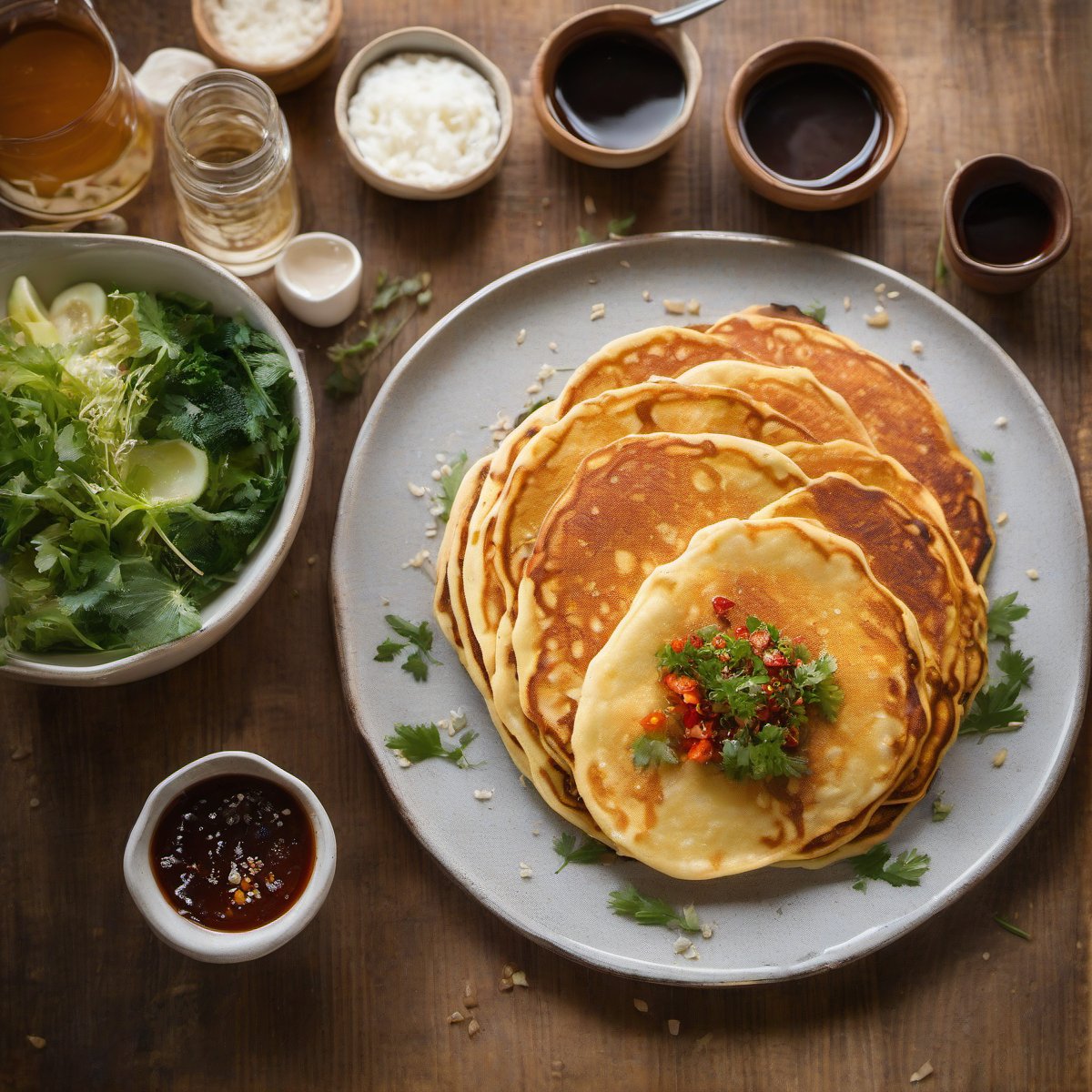
- Fry the pancakes: Pour in about half of the batter (enough to create a 6–8 inch circle). Do not spread it; let it pool naturally. Cook for 3–4 minutes without moving it, until the bottom is golden brown and crispy.
- Flip: Carefully flip the pancake using a spatula. It should release easily if the bottom is set. Cook on the second side for another 2–3 minutes until golden brown.
- Serve immediately: Transfer to a plate lined with paper towels to drain excess oil. Serve hot with the prepared dipping sauce.
Nutrition
Notes
The secret isn't fancy ingredients; it's letting the batter rest so the flour hydrates fully. This prevents the pancakes from turning gummy in the middle while the outside burns. I serve them hot with a simple soy-vinegar dip, often alongside kimchi fried rice or just as a snack with beer on weekends.