Ingredients
Method
- Prep and season: Pat the short ribs completely dry with paper towels—this is crucial for a good sear. Season generously with salt and pepper on all sides. Set aside while you heat your pan.
- Sear the meat: Heat 2 tablespoons of oil in a large Dutch oven or heavy pot over medium-high heat. Working in batches so the pieces don't crowd (leave about an inch between each rib), sear until deeply browned—about 3 to 4 minutes per side. Transfer to a plate as you go; you want that rich fond stuck to the bottom of the pot.
- Build the aromatics: Reduce heat to medium and add the remaining tablespoon of oil if needed. Add the diced onion and cook, stirring occasionally, until softened and lightly golden—about 6 minutes. Stir in the garlic and tomato paste; cook for another minute until fragrant and the paste begins to darken slightly at the edges.
- Deglaze: Pour in the red wine (or broth), scraping up all those browned bits from the bottom with a wooden spoon. Let it simmer for 2 minutes to reduce slightly.
- Braise: Return the short ribs and any accumulated juices to the pot. Add the thyme sprigs, dried thyme, bay leaf, kosher salt, and enough beef broth to come about halfway up the meat (you may not need all of it). The liquid should be hot when you add it.
- Cook low and slow: Cover with a tight-fitting lid and transfer to a 325°F oven for 2½ hours. If braising on the stove, keep the simmer very gentle—just a few bubbles breaking the surface every few seconds. The meat is done when you can pull it apart easily with a fork; internal temperature should be at least 190°F (higher if you prefer fall-apart tenderness).
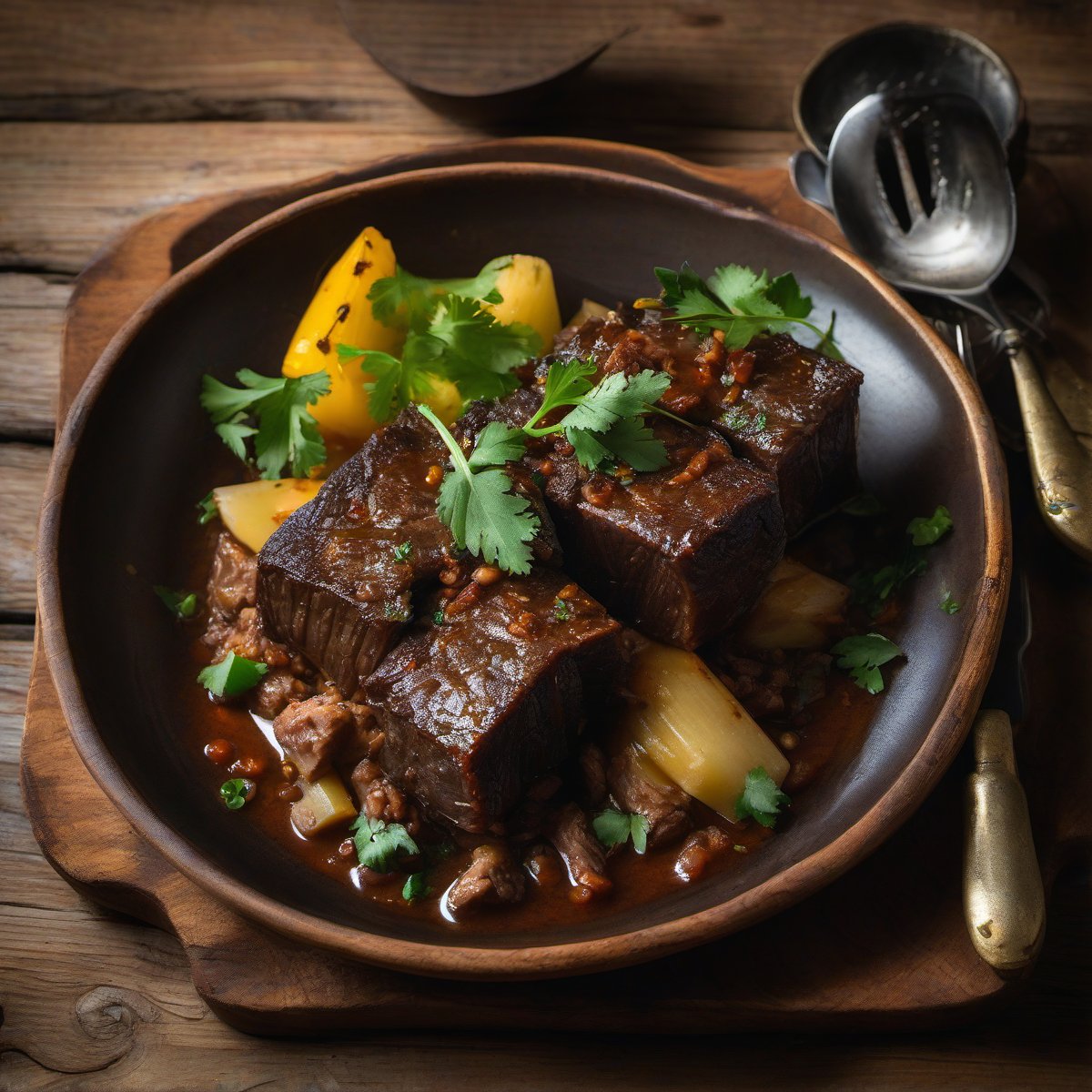
- Finish and serve: Remove from heat and let rest for 10 minutes before serving. Skim off excess fat from the surface of the sauce, then taste and adjust seasoning—add a little more salt or pepper as needed. Serve with mashed potatoes, rice, or crusty bread to soak up every bit of that rich sauce.
Nutrition
Notes
The key is getting the sear right before braising. Pat those ribs dry with paper towels and don't crowd the pan; if they're touching, they'll steam instead of brown. Once you've got that deep crust and transferred them to a pot or roasting dish, just add your aromatics and enough liquid to come halfway up the meat. I usually use a combination of broth and tomato paste for depth, then let it do the work—either covered on low heat in the oven or simmered gently on the stove.
I serve this with mashed potatoes or crusty bread because the sauce is too good not to soak up. Leftovers reheat beautifully after a night in the fridge; the flavors actually deepen overnight, so I often make it ahead when I know I'll be busy. The meat should pull apart easily with a fork—if you can still feel resistance, give it another half hour.