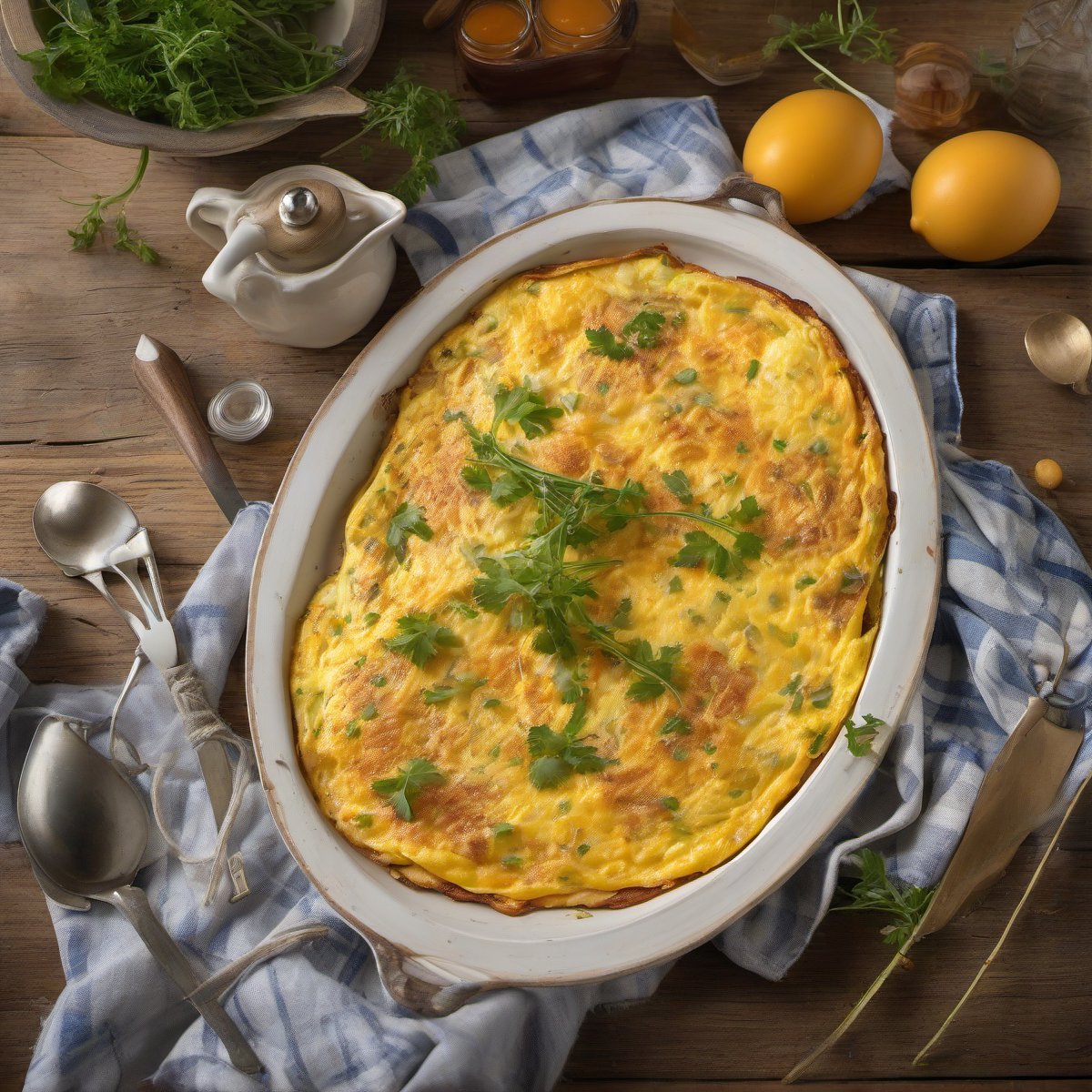
Ingredients
Method
- Whisk the eggs: Crack the eggs into a bowl. Whisk vigorously until the yolks and whites are fully combined and the mixture is slightly frothy. Season generously with salt and pepper. Do not add milk or cream to the eggs themselves for this recipe; we want pure egg flavor.
- Melt half the butter: Heat a non-stick 8-inch skillet over medium-low heat. Add 1/2 tablespoon of butter. Swirl to coat the bottom evenly. Wait until the foaming subsides slightly but before it browns.
- Cook the base: Pour in the egg mixture. Let it sit undisturbed for about 10 seconds, then gently push the cooked edges toward the center with a silicone spatula, tilting the pan to let uncooked egg flow into the empty spaces. Repeat until the bottom is set but the top is still slightly wet and custard-like (about 2-3 minutes).
- Add filling: Sprinkle the grated Gruyère and half of the chives evenly over one half of the omelet.
- Fold and finish: Gently fold the unfilled side over the filled side using your spatula. Slide the omelet onto a plate, seam-side down. Remove from heat immediately to prevent overcooking. The internal temperature should reach 145°F (63°C) for optimal texture.
- Make the sauce: Without washing the pan, return it to medium-low heat. Pour in the Calvados carefully (it may flare slightly). Let it simmer for 30 seconds to cook off the raw alcohol smell. Stir in the heavy cream and brown sugar. Simmer gently for 1-2 minutes until the sauce thickens slightly and coats the back of a spoon.
- Serve: Drizzle the warm Calvados sauce over the plated omelet. Garnish with the remaining fresh chives. Serve immediately while hot.
Nutrition
Notes
It belongs in your regular rotation because it feels luxurious but comes together in under ten minutes if you have your mise en place ready. The secret is deglazing the pan immediately after removing the omelet; the residual heat warms the cider without boiling off its delicate apple notes, creating a silky sauce that coats every forkful.