Ingredients
Method
- Make the compote first — This is where I start each time, since it needs to cool. Combine blackberries, sugar, bourbon, lemon juice, vanilla, and salt in a saucepan over medium heat. Bring to a simmer and cook for about 8 minutes until berries have broken down and released their juices. Remove from heat and let cool completely (about 15-20 minutes).
- Prepare the shortcake dough — Whisk flour, sugar, baking powder, and salt together in a large bowl. Add cold cubed butter and work it into the flour using your fingers or a pastry cutter until you have pea-sized pieces with some smaller bits (about 1-2 minutes). Make a well in the center and add egg yolk plus heavy cream. Gently fold together just until the dough comes together — don't overwork it, as this is what makes them tender.
- Shape and bake — Turn out onto a lightly floured surface and gently pat into about ¾-inch thickness. Cut into rounds with a biscuit cutter (or use a glass if you don't have one) and place on a parchment-lined baking sheet. Brush tops with heavy cream and sprinkle with coarse sugar if desired. Bake at 400°F for 15-18 minutes until golden brown and cooked through.
- Whip the whiskey cream — While shortcakes cool, beat heavy cream, whiskey, powdered sugar, and vanilla together until soft peaks form (about 2-3 minutes). Don't overwhip! You want it pourable enough to drizzle but thick enough to hold its shape.
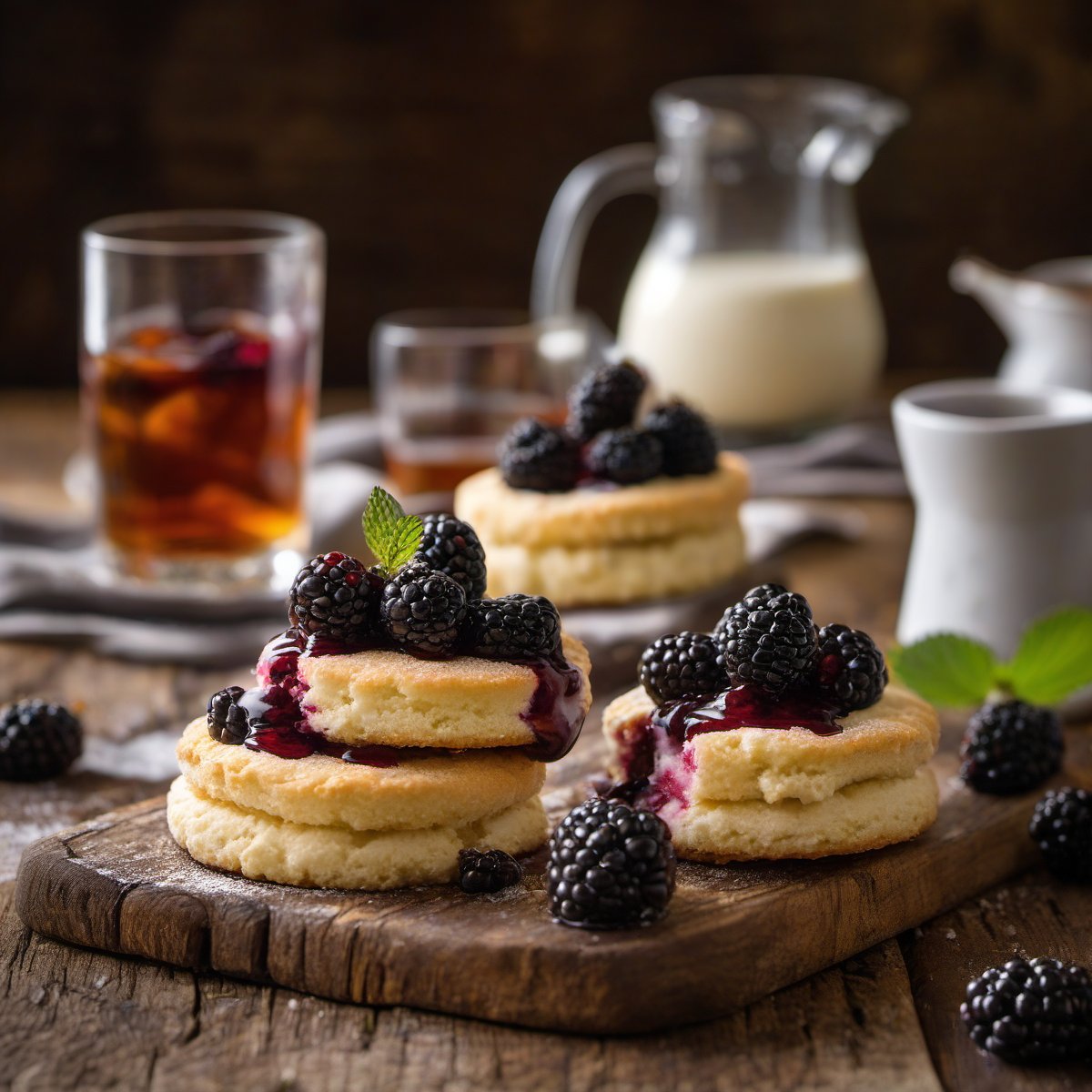
- Assemble — Split each warm shortcake in half horizontally. Spoon a generous amount of cooled compote onto the bottom half, top with more cream, then cap with the other half of the shortcake. Serve immediately while still slightly warm.
Nutrition
Notes
The blackberry bourbon compote is the real secret weapon here — the fruit breaks down into a jammy layer while the bourbon adds warmth without overwhelming the berries' natural sweetness. I've tried this with both fresh and frozen berries, and honestly, there's barely a difference. The whiskey cream on top just makes it feel like you went to more trouble than you actually did.
The key tip that changed everything for me: don't let the butter melt before it hits the flour. I used to grate frozen butter directly into the mixture, which works fine, but now I keep a small bowl of room-temperature water nearby and add just enough during mixing so the dough comes together without overworking. It's such a simple thing, but it makes the difference between tender and tough.