Ingredients
Method
- Make the spice paste. Heat a dry skillet over medium heat and toast coriander seeds, cumin seeds, cardamom pods, and cinnamon stick for 2–3 minutes until fragrant. Let cool slightly, then pulse in a food processor with soaked chilies (drained), shallots, garlic, ginger, lemongrass, tamarind paste, and palm sugar until you have a thick, smooth paste. Set aside.
- Brown the beef. Heat oil in a large Dutch oven or heavy-bottomed pot over medium-high heat. Working in batches to avoid crowding, sear beef cubes until browned on all sides (about 3–4 minutes per batch). Remove and set aside. You should have about two tablespoons of fond stuck to the bottom of the pot — that's flavor gold.
- Bloom the paste. Reduce heat to medium-low. Add your spice paste to the same pot and cook, stirring frequently, for about 8–10 minutes until it darkens slightly and smells deeply aromatic. If the paste starts sticking or burning around the edges, lower the heat. It should have a rich, reddish-brown color when done.
- Add beef and liquids. Return browned beef to the pot along with any resting juices. Pour in coconut milk and water (or broth). Bring to a gentle simmer — you want small bubbles breaking the surface, not a rolling boil.
- Simmer until tender. Cover partially and cook for 1½–2 hours, stirring every 15 minutes or so. The beef is ready when it's fork-tender and falling apart (internal temperature around 190°F if you have an instant-read thermometer). You'll see the coconut milk start to reduce and thicken into a rich gravy that coats the meat thickly.
- Finish and adjust. Uncover and cook for another 20–30 minutes until your desired consistency is reached — I prefer it on the thicker side where the sauce clings heavily but isn't dry. Taste and season: add more salt if needed, a pinch of sugar to balance acidity, or extra chilies for heat. Stir in lime juice just before serving.
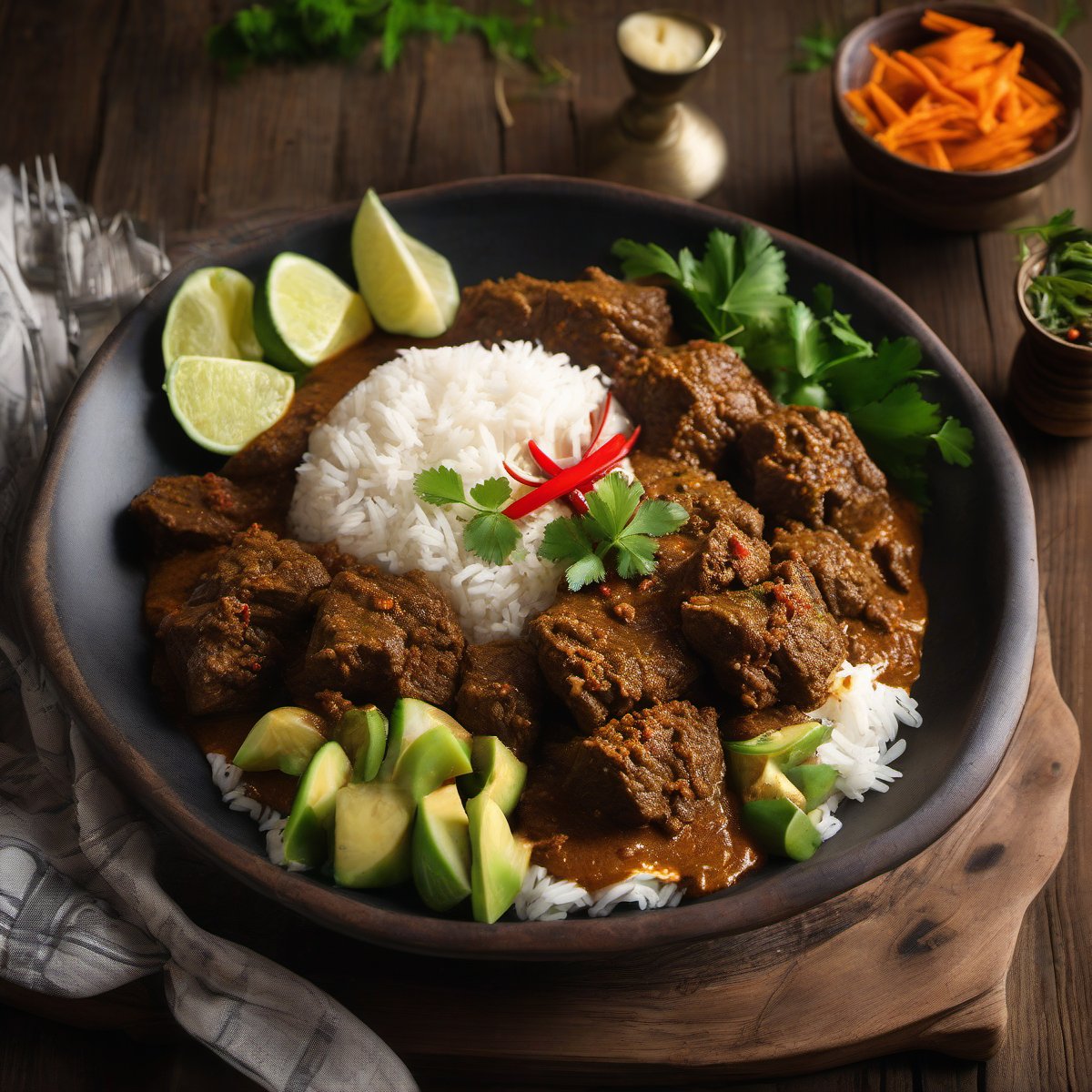
- Serve. Spoon over steamed jasmine rice with cilantro and red onion on top. Leftover rendang tastes even better the next day as flavors continue melding together.
Nutrition
Notes
The dish itself is straightforward — beef simmered slowly with coconut milk until it falls apart tender, thickened into that beautiful dark gravy where the meat practically melts on your tongue. I serve it over rice because the sauce needs somewhere to go, and a squeeze of lime at the end brightens everything up without overpowering. It's one of those recipes where you can prep most of the work ahead and just let it cook while you do something else entirely.
The secret that makes the difference is patience with the paste: toast your spices until fragrant, don't rush the simmer, and taste for balance between the warmth of cinnamon and the heat of chilies. Once I started doing this instead of dumping everything in at once, my rendang earned a permanent place in whatever rotation I was using.